
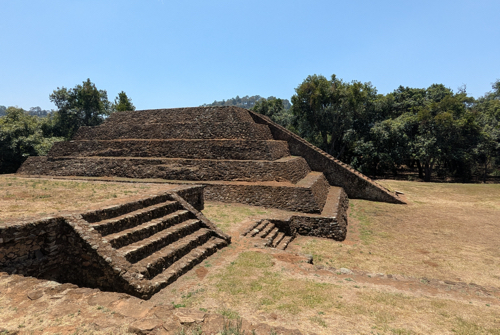
Explore the archeological site of Tingambato.
The Tingambato archaeological zone lies on the south side of the town of the same name. Climatic conditions of this geographical area, situated on the edge of a hot climatic zone, may have suggested to the ancient populace the name Tinganio, which in Tarascan means "where the fire ends."
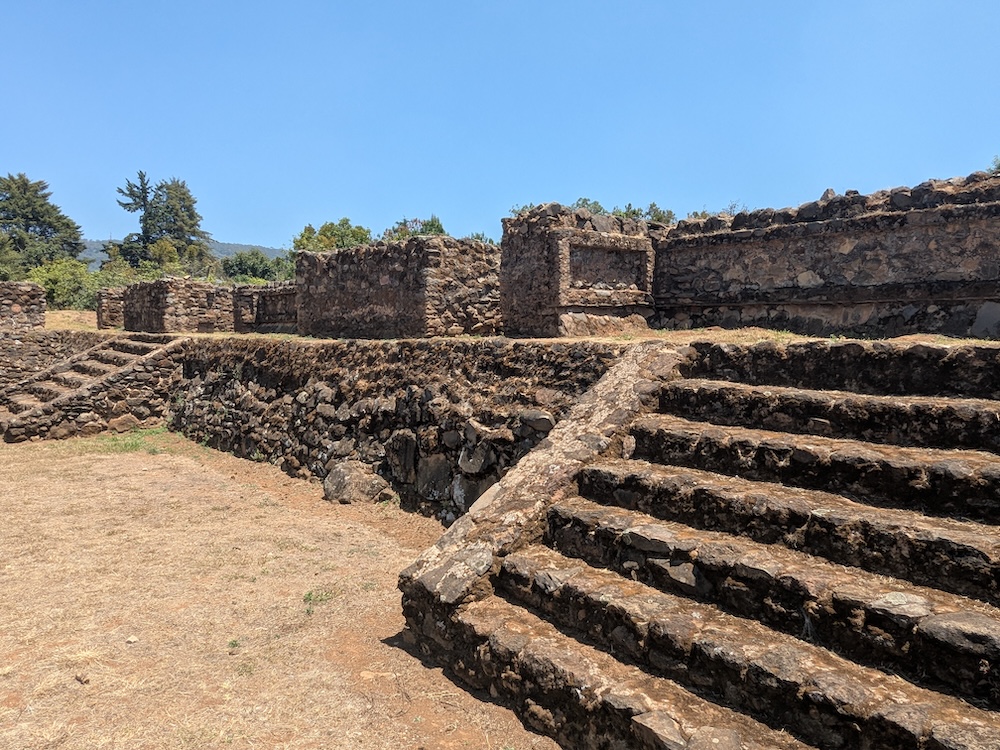
Dr. Román Piña Chan places the site in the Mesoamerican Classical Period: between the first occupation stage (450-600 AD) and the second (600-900 AD). Its distinctive features include planned urban development and a right-angle layout (based on perpendicular streets) for the main settlements. It is made up of a small ceremonial center and a civic area (perhaps a palace). It was built on an artificially leveled surface, the natural ground sloping toward the southwest, where there is a large retaining wall. It has two small pyramidal bases, several plazas or courtyards, a ball court, a series of walls forming rooms, and a tomb. The structures combine so as to provide both open spaces for celebrating public ceremonies and closed spaces of restricted access for activities of a private nature.
Tinganio's functions as a ceremonial center and its large dimensions prompt us to describe it as the "Place where the divine attains its human dimension." This site's great charm comes from the arrangement of the structures, the constructions' small size, and the avocado groves which surround it.
Moon Pyramid
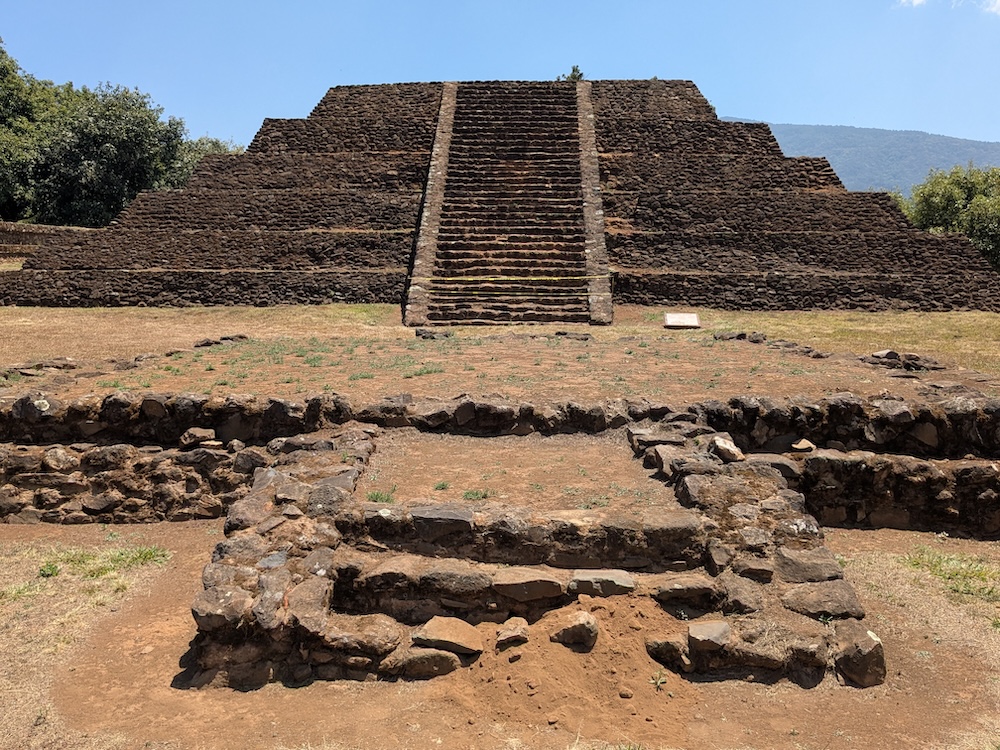
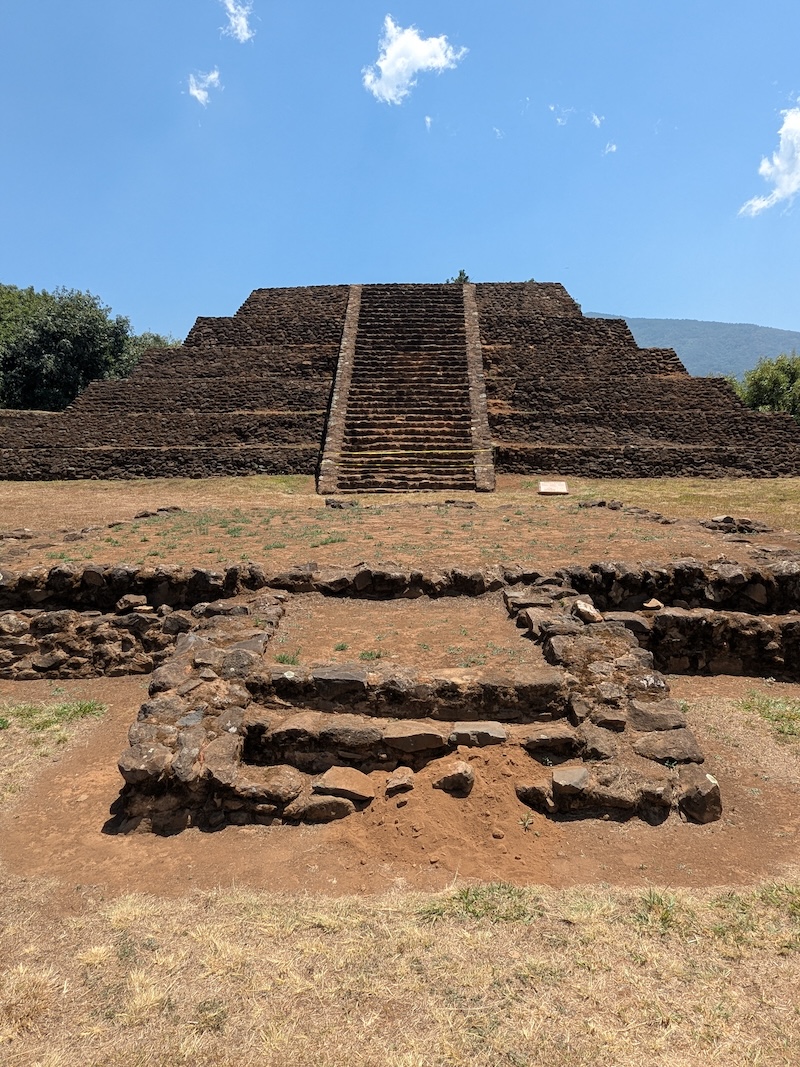
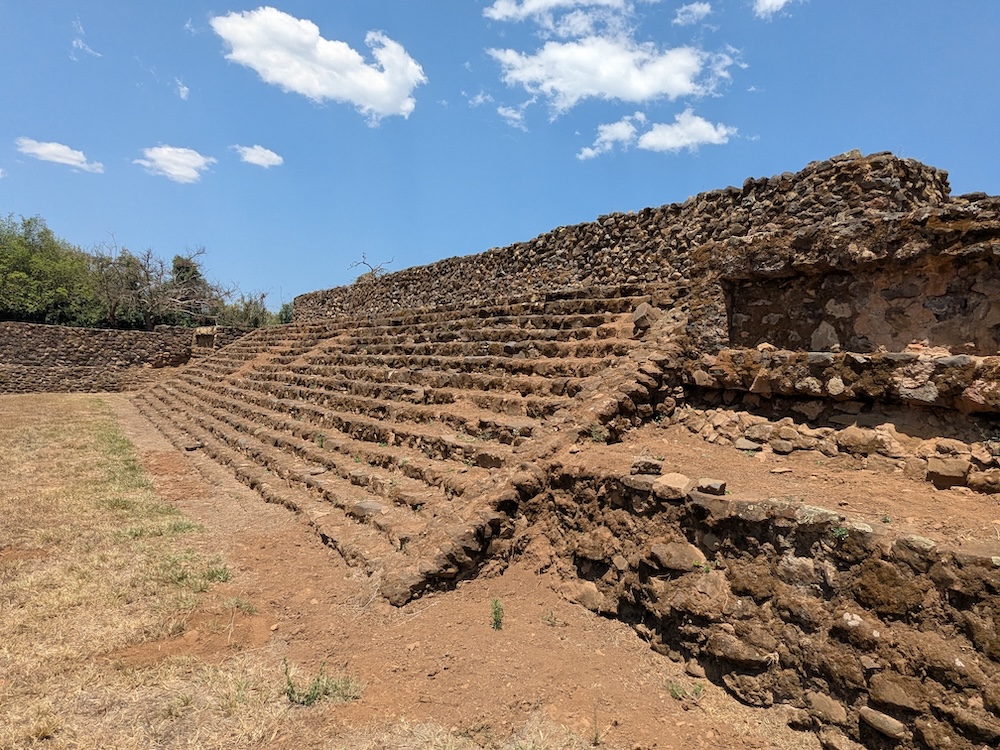
This structure forms part of the site's ceremonial area, together with the West Structure, Plaza 1, and the Ball Court. It is known locally as the "Moon Pyramid." Partially exposed and restored, it consists of six sloped tiers on a square ground plan, each side at its base measuring 34 meters with a height of 8 meters. A stairway 5.5 meters across, with undecorated side supports and 36 steps, juts from the building at the center of the west face.
Plaza 1
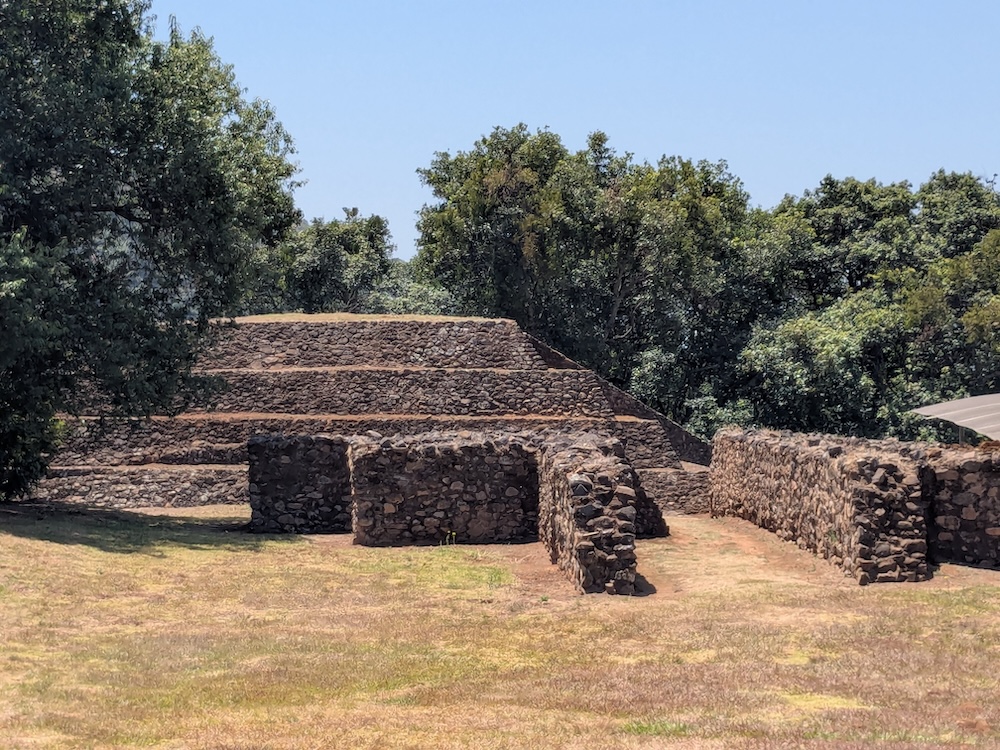
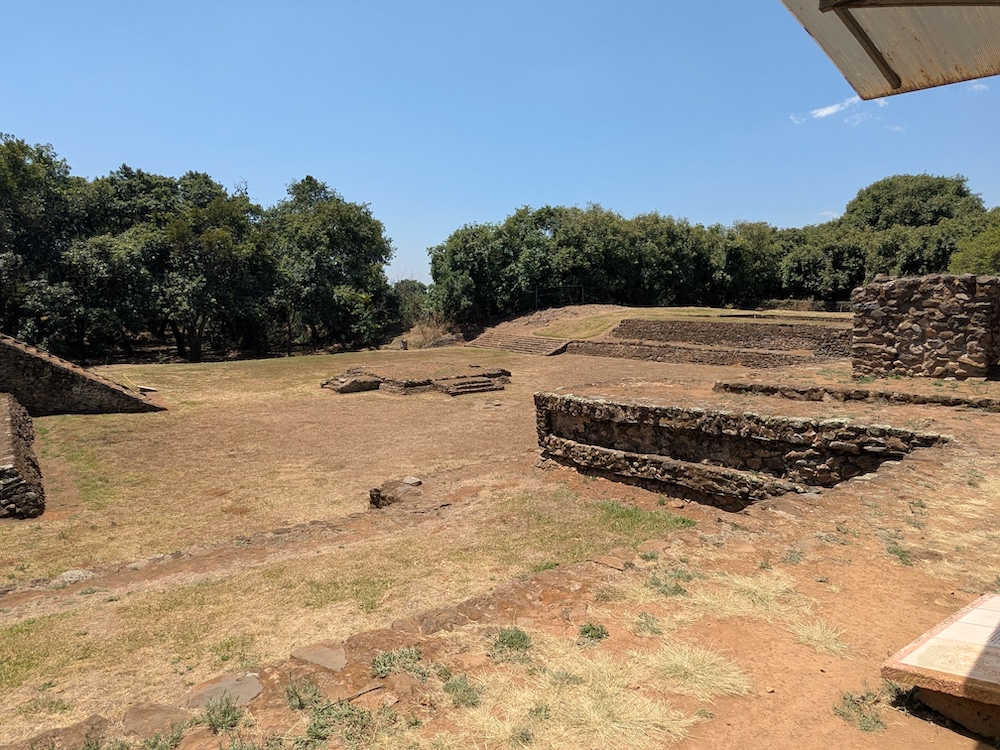
The level of Plaza 1 matches that of the base of the East Structure's first tier. It adjoins a sloping plaza (Plaza 3) to the south, the Ball Court's platform to the west, the Civil Area Great Platform's entrance stairway to the north, and the East Structure to the east. Stairways on the south side lead to another plaza or courtyard (as yet unexplored), and on the west side another stairway flanked by supports, which seems to have been covered over in the second construction phase, reaches the Ball Court platform's first phase. To the north another of greater size ascends to the Great Platform, and yet another (flush against the face and belonging the Great Platform's first construction period) reaches the East Structure's second tier level. A further, but smaller flight of stairs from the second construction stage leads directly to the entrance of the Tomb, while the last one, on the northeast corner, reaches to the level of the East Structure's second tier.
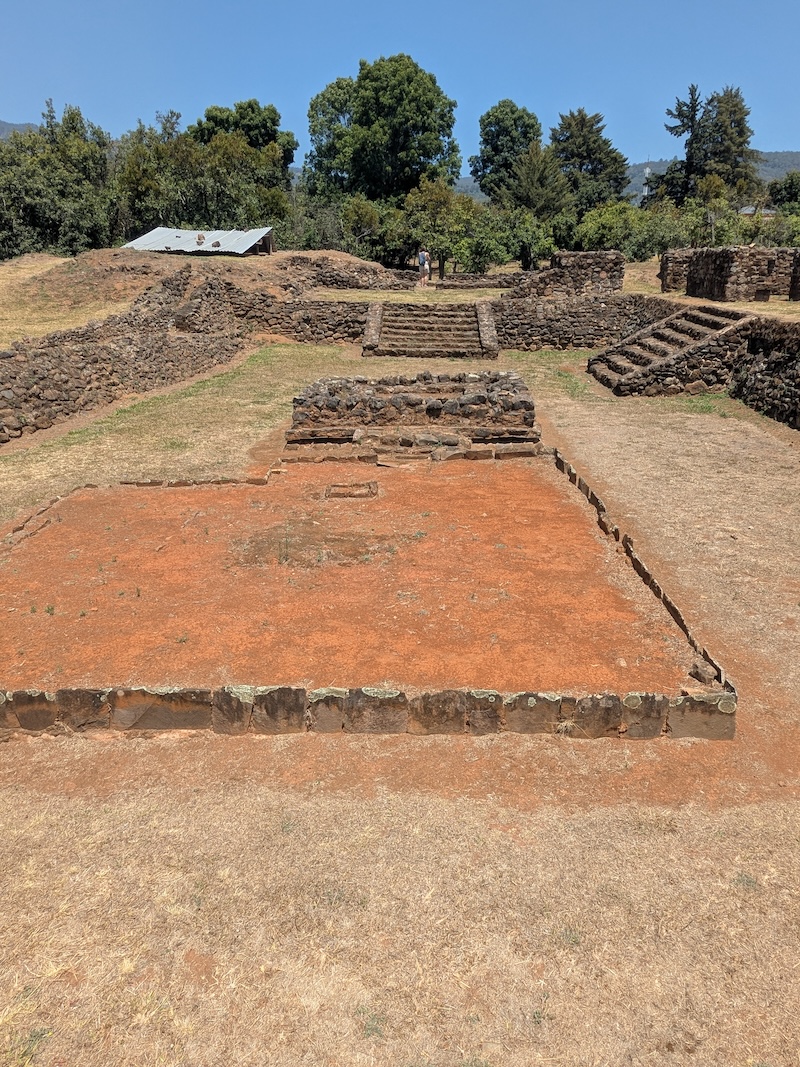
In the middle of this plaza is a mostly crumbled square altar known as Altar 1. On each of its four sides it has stairways flanked with side supports. In the course of its exploration, slabs similar to those which were used as a base for panels were found scattered around the area.
The Ball Court
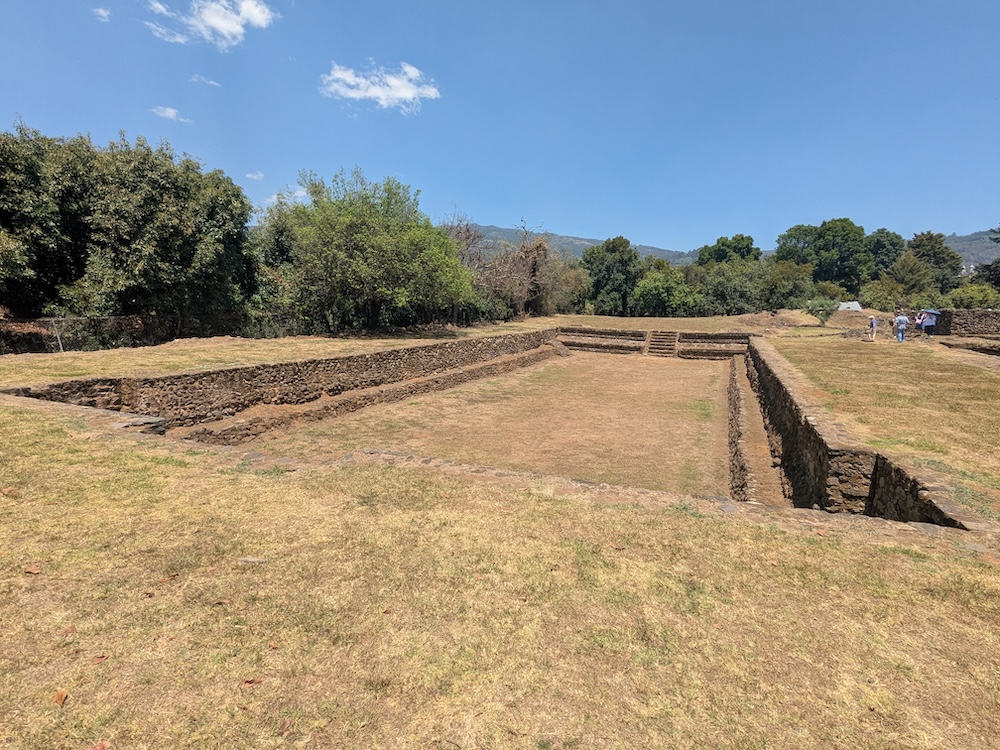
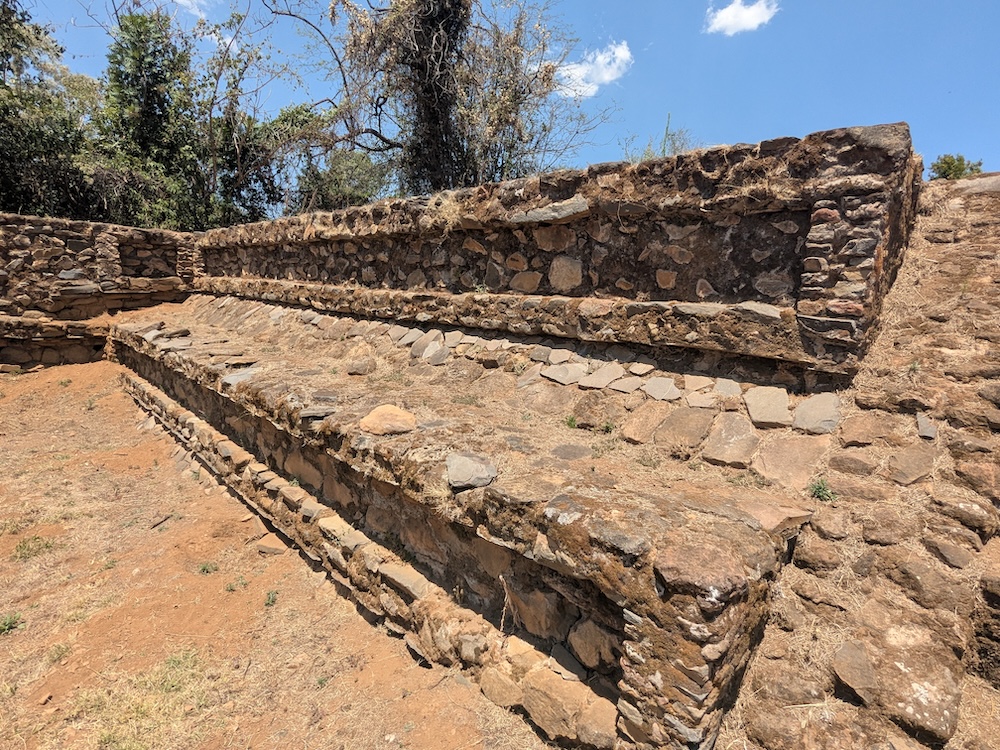
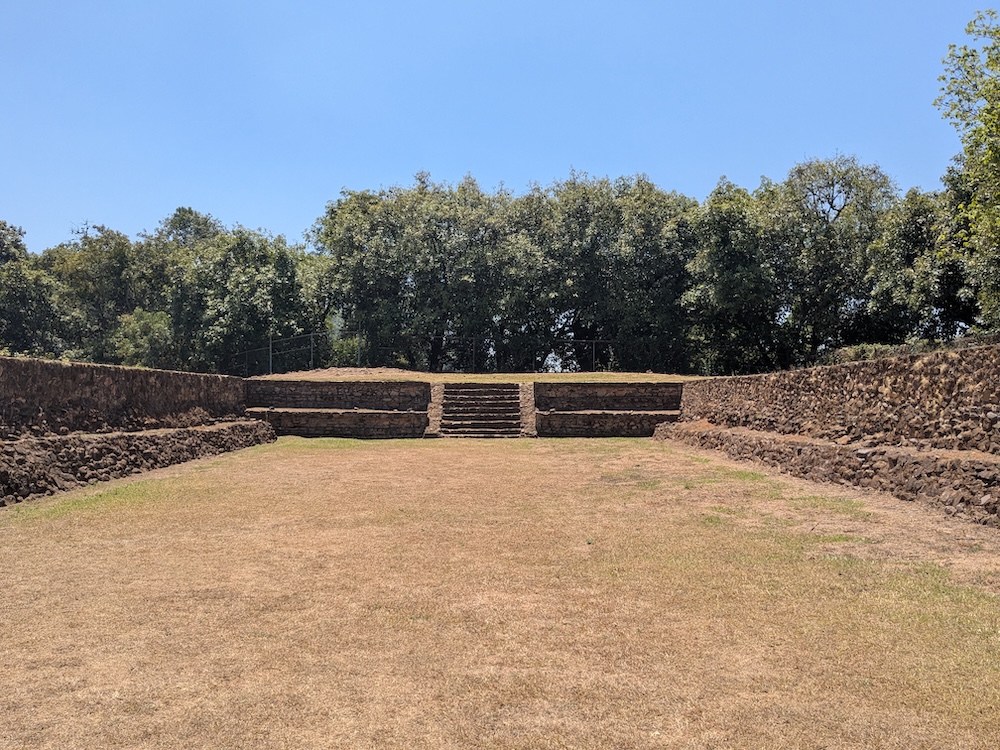
Built within a rectangular platform, the Ball Court has an I-shaped north-south ground plan; the central corridor or playing field is bordered by banquettes with sloped walls from the first construction phase which adjoin other, straight-sided walls. The end supports or side corridors, formed by two slope-panel tiers, have centered stairs flanked by stone supports which lead down onto the playing field. The north end support has a small stairway which starts at the first tier and enable access to the Civil Area.
Between the playing field itself and the top of the platform there is a difference in floor level of 8 feet. It is important to note that the walls surrounding the Ball Court field display the slope-panel system in both construction stages which is not the case with the rest of the structures.
Tomb 1
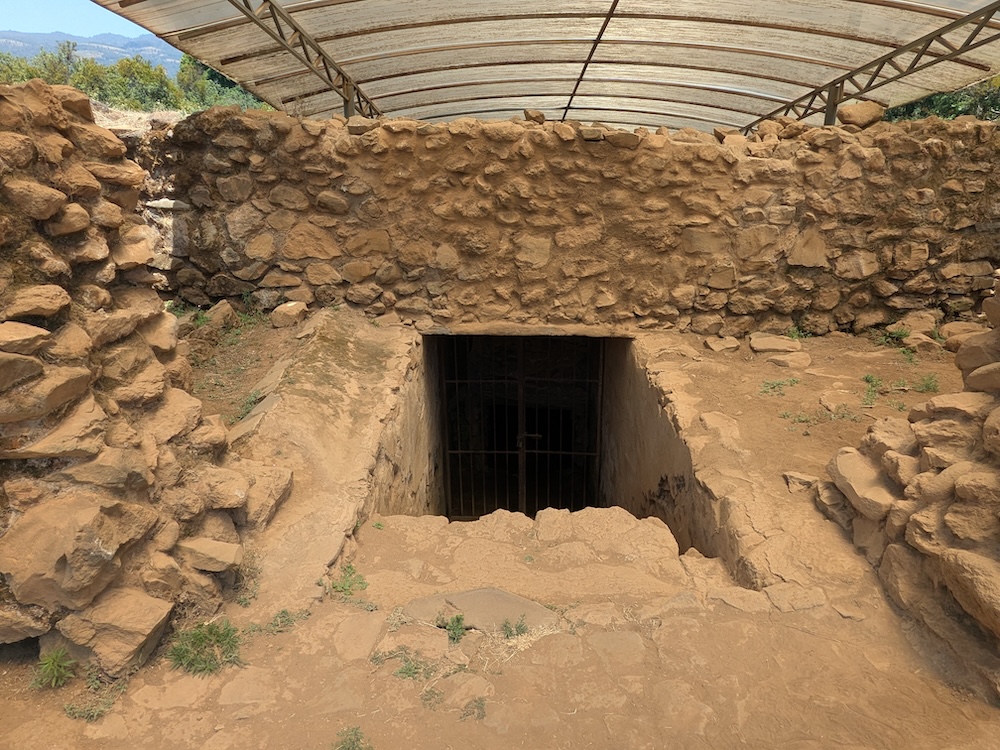
Tomb 1 was constructed beneath the rooms at the Great Platform's southeast corner. One enters it from the Great Platform down a stairway with six narrow, uneven steps built from stone and mud. At the bottom a small passageway leads into the tomb. The chamber entrance is rectangular and cramped (less than 3 feet high and 40 inches wide). Five stone slabs placed upright protected it and a large slab on the side walls serves as a lintel for this entrance.
The chamber, a room whose walls are about 5 feet high, measures 11 feet from north to south and only slightly more from east to west. The ceiling consists of horizontally staggered slabs which meet at the middle to form a dome. This technique resembles the Mayan false vault, since it has no keystone.
A complete skeleton was found in sitting position against the west side of the tomb's entrance. The 32 skulls scattered about the room with their respective offerings hint at the tomb's reuse, the existence of a beheading ritual or, perhaps, at the custom of using trophy skulls. The offerings consist of various ceramic and obsidian objects, as well as bone hole punches, a snail trumpet, a snail bracelet set with turquoise, nose plugs, rings, and necklaces.
Altars 2 and 3
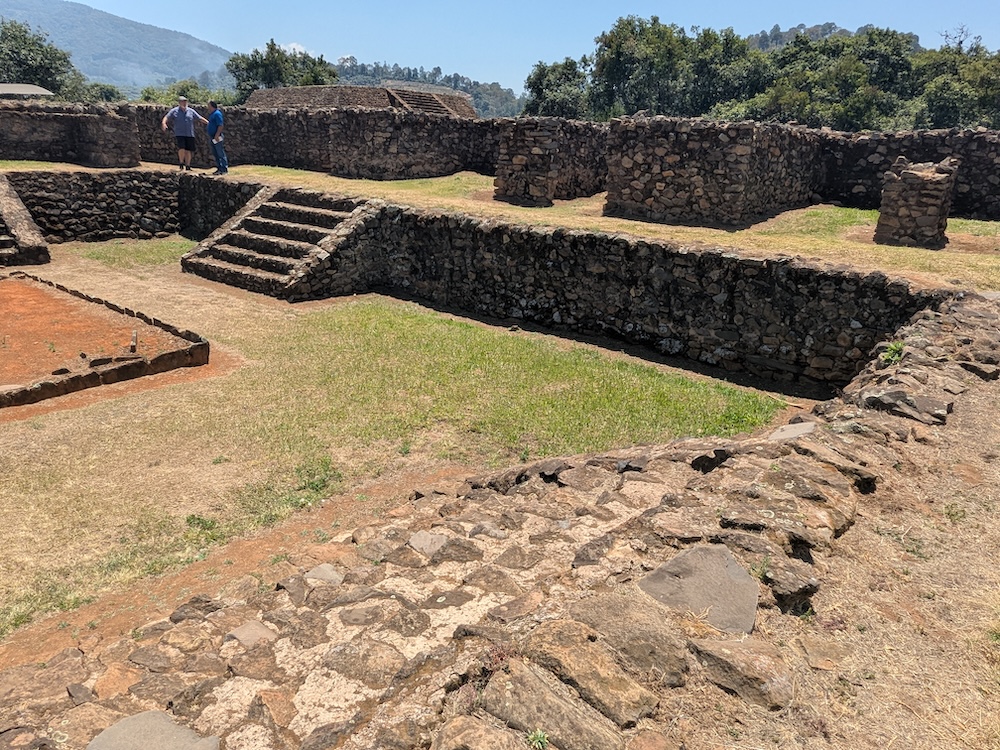
This plaza is located in the middle of the Great Platform to the north of Plaza 1. Because of its lower level it could be regarded as a sunken courtyard. It is bordered by a sloped wall and, on all four sides, stairways with side supports. These stairways serve as entrances to the Great Platform. Placed in the middle of the plaza are two small altars. Altar 2 is a square structure made with charanda, a kind of reddish earth from the
region. Demarcated by vertically placed slabs, it is found near the south end of Plaza 2. Due to its location and style it seems to be an addition.
Altar 3, located in the middle, has a square ground plan and a slope-panel construction system. There are stairs on its north and south sides. It seems to have had two tiers, but only the first survives.
Interpretive text courtesy of Mexico's National Institute of Archeology and History (INAH)